Newsletter
New Value Added Tax (VAT)
Feb 08, 2022
The COVID-19 pandemic has left lasting damage, not only to public health, but to the economy as well. A lot of effort will be required to recover both aspects, both by the government and by individuals. One of the steps that the government has taken to accelerate economic growth during this pandemic is issuing a new tax regulation in the form of Law No. 7 of 2021 regarding Tax Regulation Harmonization (Law No. 7 of 2021) on 29th October 2021 which revised many tax provisions, including the Value Added Tax (VAT) which was previously regulated in No. 42 of 2008 regarding Third Amendment to Law No. 8 of 1983 concerning Value Added Tax on Goods and Services and Sales Tax on Luxury Goods (Law No. 42 of 2008).
Ministry of Energy and Mineral Resources Invites Other Ministries/Agencies to Accelerate Electric Vehicle Conversion
Feb 02, 2022
The Ministry of Energy and Mineral Resources (MEMR) invites Government Ministries and Institutions in Indonesia to participate in supporting the acceleration of the national program to implement Battery-Based Electric Motorized Vehicles (Kendaraan Bermotor Listrik Berbasis Baterai / KBLBB) for road transportation, especially two-wheeled roadworthy operational vehicles with a book value of Rp. 0.
Renewal of LSBU Application Process
Jan 26, 2022
On 25th November 2021, the Minister of Public Work and Housing issued Circular Letter No. 21/CL/M/2021 Regarding Procedures for Fulfilment of Business Licensing Requirements, Implementation of Construction Work Competence Certification, and Implementation of Business Entity Certificates and Construction Work Competency Certificates (CL 21/2021). The Circular Letter stipulates many things, such as Fulfilment of LSBU/ Lembaga Sertifikasi Badan Usaha (Business Certification Institute) Business Licensing Requirements, Fulfilment of LSP/ Lembaga Sertifikasi Profesi (Profession Certification Institute) Business Licensing Requirements and the Fulfilment of Business Licensing Requirements for Construction Services Business Entities.

Progress of Solar Photovoltaic in Asean Countries: A Review
Jan 25, 2022
The present global energy scenario, in which fossil fuels play a preponderant role, faces significant energy and environmental challenges. To help address these challenges, countries across the world are increasing the contribution made by renewable energy (RE) resources to their energy supplies. Feed-in Tariff (FiT) is one of the most effective incentive policies used to promote the RE sector especially at the micro-generation level.
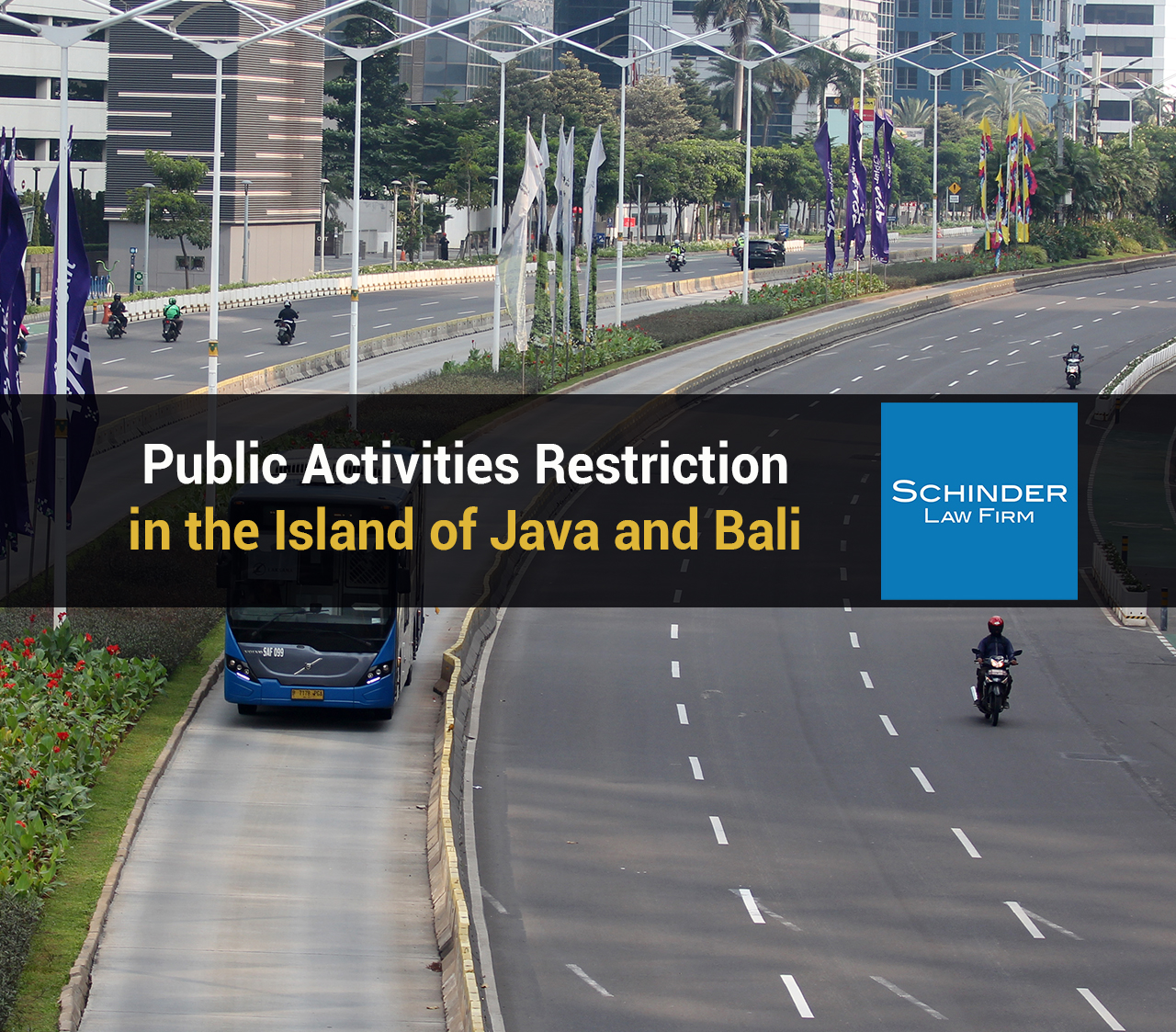
Public Activities Restriction in the Island of Java and Bali
Jan 21, 2022
The Minister of Home Affairs issued The Minister of Domestic Affairs Instruction No. 03 the Year 2022 regarding the Implementation of Public Activities Restrictions Corona Virus Disease 2019 Level 3, Level 2, And Level 1 In Java and Bali islands. This Instruction clarifies the level of Community Activities Restriction (PPKM) in these areas, along with the list of activities that are allowed and prohibited.
Domestic Coal Market Obligation and Temporary Export Ban
Jan 19, 2022
Domestic Market Obligation (DMO) of coal is the obligation of Business Entities to submit part of its share of coal production to the state through the Implementing Body in the context of supplying coal to meet domestic needs, the amount of which is regulated in the Cooperation Contract. This DMO regulation is essential to control the amount of coal
Feed-in Tariff for Solar Photovoltaic: The Rise of Japan
Jan 14, 2022
Japan started implementing a national Feed-In Tariff (FiT) mechanism on the 1st July 2012, which included specific payment tariffs for solar photovoltaic (PV) installations. This marks a new era in the renewable energy landscape in Japan. This paper aims at analysing the solar PV prospect in Japan, particularly in both residential and non-residential sectors.

Calculating the Overtime Wage: Key Provisions Your Company Should Know
Jan 13, 2022
The calculation of overtime wage is regulated in Article 26, Article 29, Article 31 Paragraph (1), Article 31 Paragraph (2), Article 31 Paragraph (3) and Article 32 of Government Regulation no. 35 of 2021 concerning Employment Agreements for Certain Time, Expert Power, Working Time and Rest Time, and Termination of Employment ("GR 35/2021").
Company Obligation
Article 26 states that overtime can only be worked at most 4 (four) hours in 1 (one) day and 18 (eighteen) hours in 1 (one) week and Article 29 further
Are You Ready for Tax Amnesty Volume II?
Jan 05, 2022
The Indonesian reformation period promotes continuous new innovations led by its people, thus helping Indonesia's economic stability. Indonesia is a country that has high economic potential, potential that is starting to be noticed by the international community due to the prosperity of natural resources contained in the motherland. Of course, rapid materialistic success is encouraging news for business actors, but for some people, this is just one edge of a double-edged sword. At the other edge of the blade is an obligation for business actors to pay taxes on their income.

Annual Prediction Output of an RADTIRC-PV Module
Dec 15, 2021
The number of solar photovoltaic (PV) installations has been increasing worldwide but the high capital cost of installation continues to be the main challenge, particularly in many developing countries. The solar concentrator, a device that focuses the sunlight onto a small area, has the potential to minimize the use of expensive PV material while maintaining the system's performance, ultimately bringing down its overall cost.