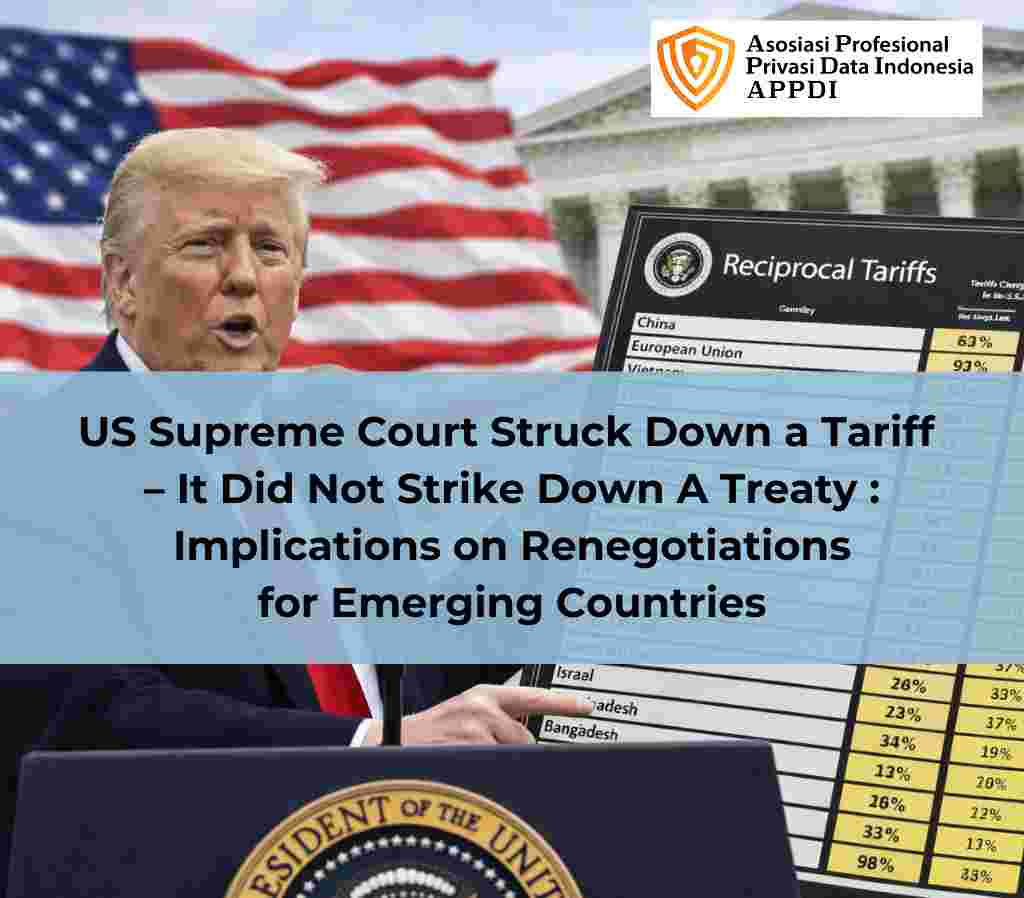
US Supreme Court Struck Down a Tariff – It Did Not Strike Down A Treaty : Implications on Renegotiations for Emerging Countries
The US Supreme Court in Learning Resources, Inc. v. Trump ruled that IEEPA (International Economic Emergency Powers Act) does not authorize the President to impose unilateral tariffs. Countries that had already signed Agreements...
Importing Snack Products Into Indonesia: Halal Certification and Regulatory Requirements for Importers
The global snack industry continues to expand rapidly, driven by increasing consumer demand and the ease of cross-border trade. Various snack products are now manufactured and distributed internationally, creating significant opportunities for companies seeking to enter new markets...

Are Employees Who Resign Before a Religious Holiday Entitled to THR?
As the religious holiday of Idul Fitri approaches, many employees look forward to receiving their Religious Holiday Allowance from their employers. Under Ministry of Manpower Regulation No. 6 of 2016 concerning Religious Holiday Allowance for Workers in Companies...

Disbursement of THR For Private Sector Employees in 2026: Provisions and Employer Obligations
The Religious Holiday Allowance (“THR”) is a Religious Holiday Allowance (hereinafter referred to as the Religious Holiday Allowance) is non-wage income that must be paid by the Employer to the Employee or their family prior to the religious holiday in accordance with Article 1 of the Regulation of the Minister of Manpower No. 6 of 2016 on Religious Holiday Allowance for Workers/Laborers in Companies (“Ministry of Manpower Reg. 6/2016”)...

A Legal Roadmap to Halal Compliance for Foreign-Invested Companies in Indonesia
Indonesia, as the world’s largest Muslim-majority country, places significant importance on halal compliance, particularly in the food and beverage (F&B) sector. For foreign investors establishing a Foreign Investment Company (PT PMA) in Indonesia, understanding the halal regulatory framework is not merely a matter of market positioning...

Infrastructure Development and Land Boundary Changes - What Property Owners Need to Know
Infrastructure development, such as the construction of roads, highways, railways, or urban public facilities, often brings significant benefits to communities, including improved accessibility, economic growth, and increased property values. However, such development can also lead to changes in the physical boundaries of private and corporate land...
Legal Certainty and Investment Considerations in Indonesian Supervised Debt Restructuring
For investors and shareholders, Suspension of Debt Payment Obligations (“PKPU”) can feel uncertain, but it is important to view it as both a protective and strategic mechanism. PKPU allows a company to restructure debts without being immediately declared bankrupt, helping preserve enterprise value and reduce the risk of larger financial losses that often accompany liquidation...
Designing Accountability, Managing Exposure: MCIPD and Section 133 PDPA
What has received far less attention — yet carries significant governance implications — is how Standard 9.2, read together with Guideline 9.3, intersects with Section 133 of the Personal Data Protection Act 2010 (PDPA)...
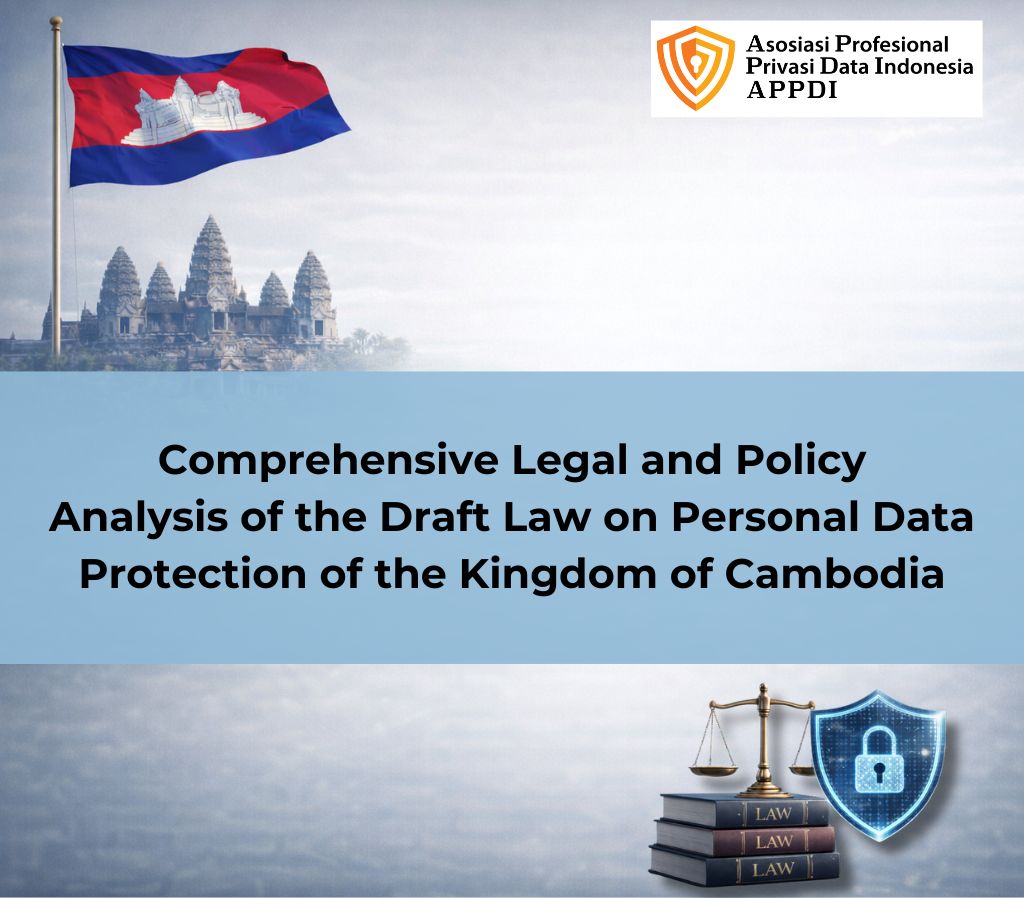
Comprehensive Legal and Policy Analysis of the Draft Law on Personal Data Protection of the Kingdom of Cambodia
This report presents a comprehensive legal and policy analysis of the Draft Law on Personal Data Protection of the Kingdom of Cambodia. It aims to support the Ministry of Post and Telecommunications (MPTC) in refining and strengthening the draft to ensure that the final law achieves its intended objectives of safeguarding personal data...
Comprehensive Legal and Policy Analysis of the Draft Law on Personal Data Protection of the Kingdom of Cambodia
Across Europe, the Americas, Asia, and Africa, modern data protection regimes increasingly empower regulators to impose direct administrative financial penalties for non-compliance. ASEAN has followed the same trajectory. Regulators are no longer satisfied with guidance, warnings, or post-incident explanations...
Investor and Shareholder Rights During Debt Restructuring Proceedings in Indonesia
Suspension of Debt Payment Obligations (Penundaan Kewajiban Pembayaran Utang or “PKPU”) is often seen as a sign of a company’s financial difficulties, which can naturally cause concern for investors and shareholders. However, PKPU is not just a warning—it is a legal mechanism designed to allow companies to restructure their debts in a structured...
Administrative Fines Are Becoming the Enforcement Norm — Why Malaysia Remains the Exception
Across Europe, the Americas, Asia, and Africa, modern data protection regimes increasingly empower regulators to impose direct administrative financial penalties for non-compliance. ASEAN has followed the same trajectory. Regulators are no longer satisfied with guidance, warnings, or post-incident explanations...
What Is NPPN? Understanding Indonesia’s Often Misunderstood Tax Facility
The Norm for the Calculation of Net Income (Norma Penghitungan Penghasilan Neto or NPPN) is one of the mechanisms provided under the Indonesian tax system to offer administrative simplicity for individual taxpayers in calculating their taxable income. By applying certain percentages determined by the tax authority,...

Naz Schinder Addresses Energy and Mining Downstream Development Dialogue Forum Convened by the China Chamber of Commerce in Indonesia
The Energy and Mining Downstream Development Dialogue Forum, convened by the China Chamber of Commerce in Indonesia and hosted by its New Energy Industry Committee, brought together senior government officials, industry leaders, and representatives from Indonesian and Chinese institutions to examine Indonesia’s downstream development agenda in the energy and mining sectors...
Unpacking Constitutional Court Decision on Adequacy, Appropriate Safeguards, and Consent for International Data Transfer (Decision No. 137/PUU-XXIII/2025)
The Indonesian Constitutional Court (Mahkamah Konstitusi) rendered judgment in Case No. 137/PUU-XXIII/2025 addressing Article 56 of Law No. 27 Year 2022 on Personal Data Protection (UU PDP) governing international data transfers...
VAT at 12% and the Tax Base from the Perspective of Indonesian Tax Law
Value Added Tax (“VAT”) is an indirect tax that plays a significant role in Indonesia’s taxation system. VAT is primarily regulated under Law Number 8 of 1983 on Value Added Tax on Goods and Services and Sales Tax on Luxury Goods (“Law 8/1983”), as amended several times, most recently by Law Number 7...
Mandatory LKPM 2026 Reporting Obligation Under Indonesian Investment Regulations
Pursuant to Law No. 25 of 2007 on Investment, Government Regulation No. 28 of 2025 on the Implementation of Risk-Based Business Licensing, and Regulation of the Investment Coordinating Board / Ministry of Investment No. 5 of 2021 on Guidelines and Procedures for Risk-Based Business Licensing and Investment Facilities, as may be amended from time to time, all companies conducting investment activities in Indonesia...

Contract Management and Risk Allocation for Overseas Construction Projects in Indonesia: Key Legal Considerations and Common Pitfalls
Construction projects involving overseas contractors and investors in Indonesia are inherently complex. Beyond technical execution, such projects require careful navigation of Indonesian contract law, construction-specific regulations, and local business practices. In practice, many disputes do not arise from the absence of contracts, but from inadequate contract management and misaligned risk allocation throughout the project lifecycle...