
Why You Should (WNI and WNA) Have Social Health Insurance (BPJS) When You Buy a Property in Indonesia
The government, through legal instruments, has designed a National Health Insurance Program ("JKN") which is mandated to the Social Health Insurance Administration Body ("BPJS Kesehatan") as stated in Article 19 paragraph (2) of Law Number 40 of 2004 which explains that JKN is held to ensure that participants receive the benefits of health care and protection to meet basic health needs.
Recently, the President of the Republic of Indonesia issued Presidential Instruction Number 1 of 2022 ("Inpres No.1/2022") which contains the
Corporate Governance in Indonesia: Change of Directors and Commissioners
In addition to the General Meeting of Shareholders, there are a Board of Directors and Board of Commissioners that are also bodies of limited liability companies in Indonesia. The Board of Directors (BOD) is the company's body that manages the day-to-day business, and the Board of Commissioners (BOC) supervises the director(s) and can step in and report to the shareholders if necessary. From time to time, companies will change their director or commissioner. Since the director and commissioner are not a regular employee, a specific procedure applies for such an amendment.

Contract Law Guide: How to amend the EPC Contract in a disagreement between consortium members
A construction project, specifically for an EPC project, is typically conducted by contractors in a consortium. The implementation of the EPC Contract was often changed or adjusted according to the project circumstances.
In some situations, a disagreement between the consortium members related to the contract amendment was unavoidable. For example, we had a client (contractors, consortium members) who needed to change a provision regarding the retention money and was willing to replace the retention money with a warranty bond, which is our client's obligation according to the EPC Contract

New Value Added Tax (VAT)
The COVID-19 pandemic has left lasting damage, not only to public health, but to the economy as well. A lot of effort will be required to recover both aspects, both by the government and by individuals. One of the steps that the government has taken to accelerate economic growth during this pandemic is issuing a new tax regulation in the form of Law No. 7 of 2021 regarding Tax Regulation Harmonization (Law No. 7 of 2021) on 29th October 2021 which revised many tax provisions, including the Value Added Tax (VAT) which was previously regulated in No. 42 of 2008 regarding Third Amendment to Law No. 8 of 1983 concerning Value Added Tax on Goods and Services and Sales Tax on Luxury Goods (Law No. 42 of 2008).

Singapore: Combating Dilatory Conduct and Non-Participation in Arbitration Proceedings - The Delicate Balance
While most will agree that justice should not be hurried, what happens when parties refuse to comply to arbitration procedural timelines? In this article, we discuss the challenges in balancing efficiency and procedural fairness in arbitration proceedings by examining the recent Singapore court decision of Sai Wan Shipping Ltd v Landmark Line Co, Ltd [2021] SGHC 8 (“Sai Wan”).

Ministry of Energy and Mineral Resources Invites Other Ministries/Agencies to Accelerate Electric Vehicle Conversion
The Ministry of Energy and Mineral Resources (MEMR) invites Government Ministries and Institutions in Indonesia to participate in supporting the acceleration of the national program to implement Battery-Based Electric Motorized Vehicles (<i>Kendaraan Bermotor Listrik Berbasis Baterai </i>/ KBLBB) for road transportation, especially two-wheeled roadworthy operational vehicles with a book value of Rp. 0.
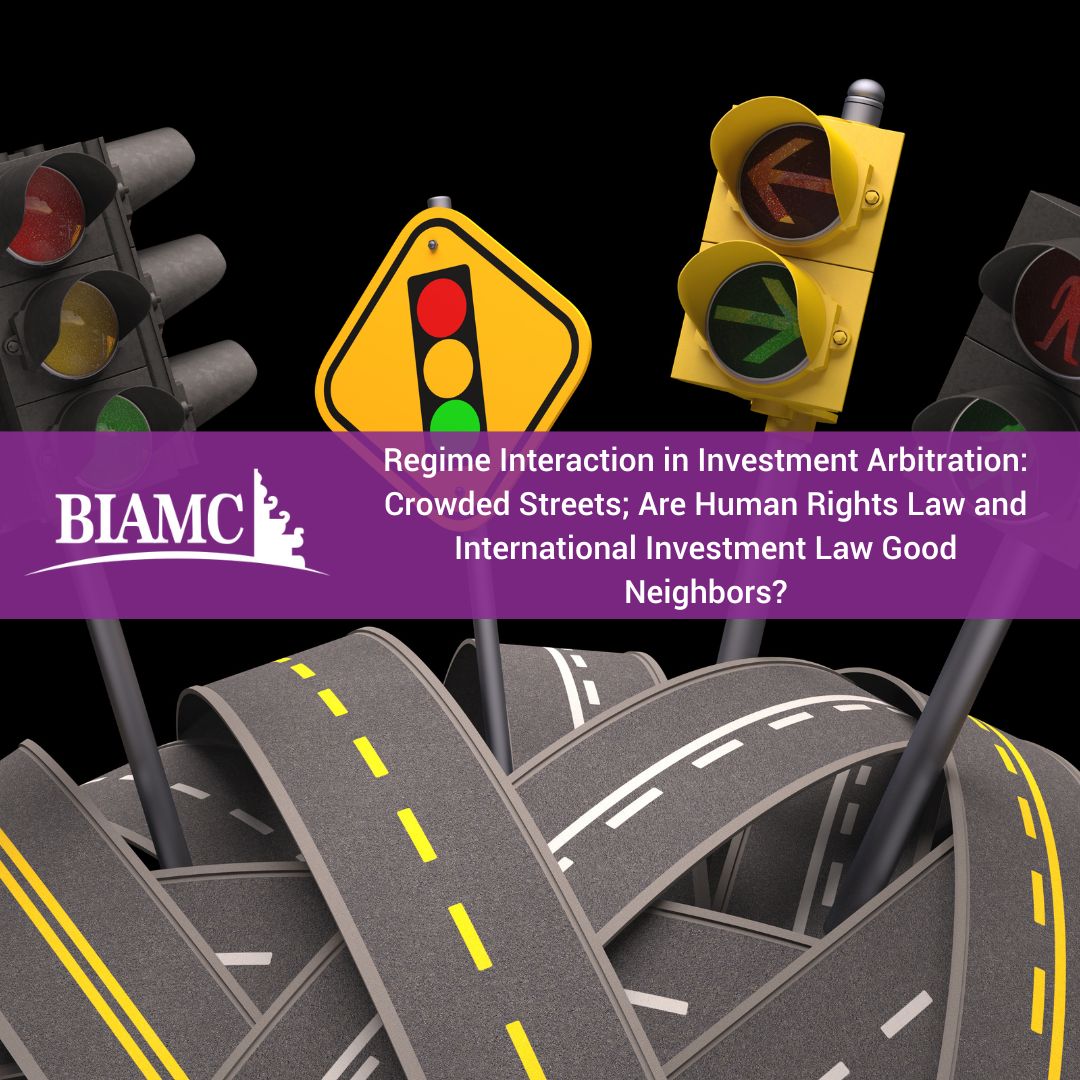
Regime Interaction in Investment Arbitration: Crowded Streets; Are Human Rights Law and International Investment Law Good Neighbors?
Globalization has diversified the actors, institutions, norms, and instruments on the international legal stage. With diversification comes increased specialization and, in turn, organization around so-called regimes. The notion that international legal regimes can exist autonomously has long been refuted; indeed, each regime draws from general international
Renewal of LSBU Application Process
On 25th November 2021, the Minister of Public Work and Housing issued Circular Letter No. 21/CL/M/2021 Regarding Procedures for Fulfilment of Business Licensing Requirements, Implementation of Construction Work Competence Certification, and Implementation of Business Entity Certificates and Construction Work Competency Certificates (CL 21/2021). The Circular Letter stipulates many things, such as Fulfilment of LSBU/ Lembaga Sertifikasi Badan Usaha (Business Certification Institute) Business Licensing Requirements, Fulfilment of LSP/ Lembaga Sertifikasi Profesi (Profession Certification Institute) Business Licensing Requirements and the Fulfilment of Business Licensing Requirements for Construction Services Business Entities.

Progress of Solar Photovoltaic in Asean Countries: A Review
The present global energy scenario, in which fossil fuels play a preponderant role, faces significant energy and environmental challenges. To help address these challenges, countries across the world are increasing the contribution made by renewable energy (RE) resources to their energy supplies. Feed-in Tariff (FiT) is one of the most effective incentive policies used to promote the RE sector especially at the micro-generation level.
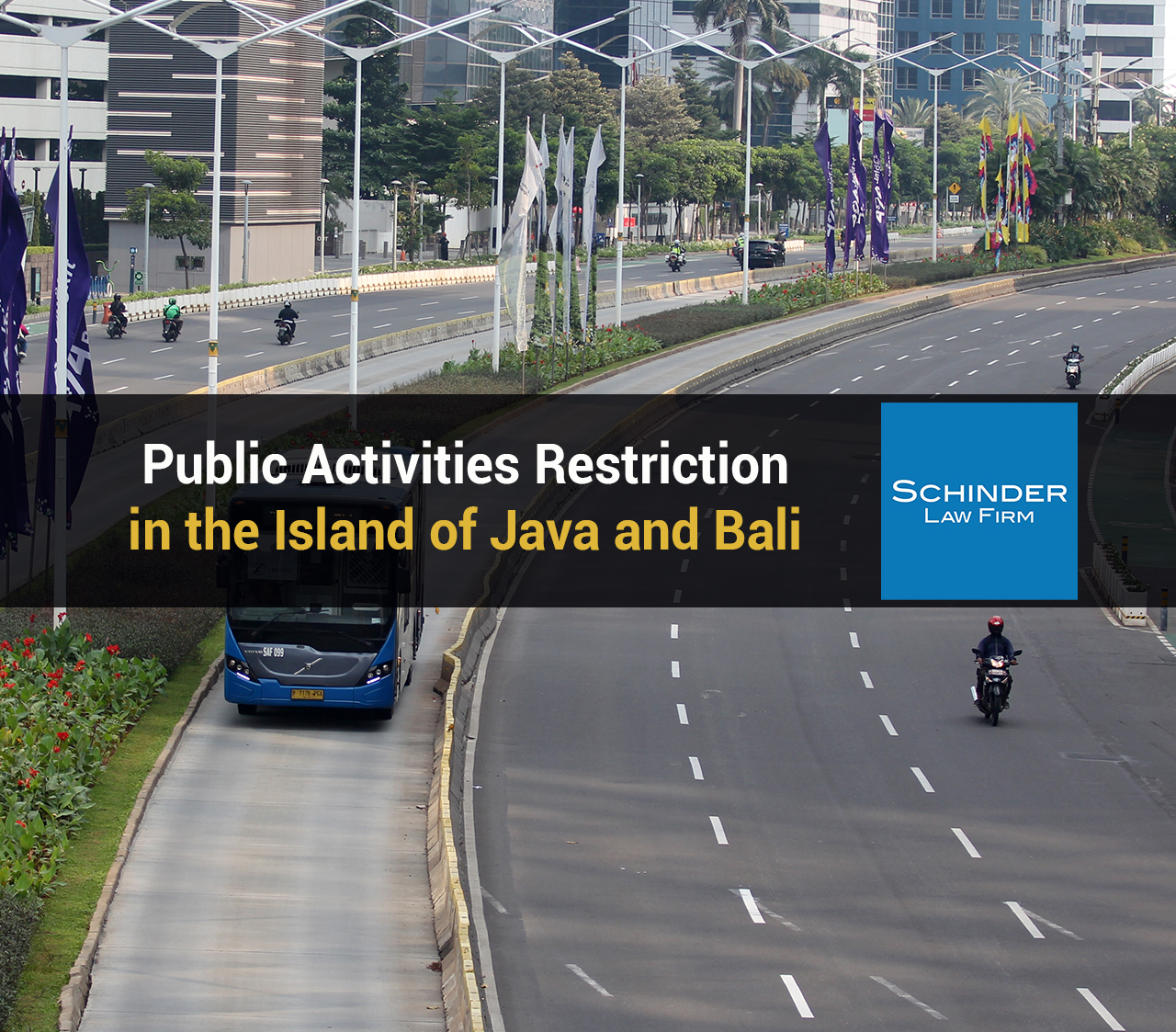
Public Activities Restriction in the Island of Java and Bali
The Minister of Home Affairs issued The Minister of Domestic Affairs Instruction No. 03 the Year 2022 regarding the Implementation of Public Activities Restrictions Corona Virus Disease 2019 Level 3, Level 2, And Level 1 In Java and Bali islands. This Instruction clarifies the level of Community Activities Restriction (PPKM) in these areas, along with the list of activities that are allowed and prohibited.

2021 in Review: Continued Movement at the Intersection of International Arbitration and Human Rights
This is the third consecutive year that we, either together or separately, have reported on trends at the intersection of human rights and international arbitration from the prior year. As we emphasized last year, the effects of the COVID-19 pandemic on this intersection are likely to remain
Domestic Coal Market Obligation and Temporary Export Ban
Domestic Market Obligation (DMO) of coal is the obligation of Business Entities to submit part of its share of coal production to the state through the Implementing Body in the context of supplying coal to meet domestic needs, the amount of which is regulated in the Cooperation Contract. This DMO regulation is essential to control the amount of coal
Feed-in Tariff for Solar Photovoltaic: The Rise of Japan
Japan started implementing a national Feed-In Tariff (FiT) mechanism on the 1st July 2012, which included specific payment tariffs for solar photovoltaic (PV) installations. This marks a new era in the renewable energy landscape in Japan. This paper aims at analysing the solar PV prospect in Japan, particularly in both residential and non-residential sectors.

Calculating the Overtime Wage: Key Provisions Your Company Should Know
The calculation of overtime wage is regulated in Article 26, Article 29, Article 31 Paragraph (1), Article 31 Paragraph (2), Article 31 Paragraph (3) and Article 32 of Government Regulation no. 35 of 2021 concerning Employment Agreements for Certain Time, Expert Power, Working Time and Rest Time, and Termination of Employment ("GR 35/2021").
Company Obligation
Article 26 states that overtime can only be worked at most 4 (four) hours in 1 (one) day and 18 (eighteen) hours in 1 (one) week and Article 29 further
Are You Ready for Tax Amnesty Volume II?
The Indonesian reformation period promotes continuous new innovations led by its people, thus helping Indonesia's economic stability. Indonesia is a country that has high economic potential, potential that is starting to be noticed by the international community due to the prosperity of natural resources contained in the motherland. Of course, rapid materialistic success is encouraging news for business actors, but for some people, this is just one edge of a double-edged sword. At the other edge of the blade is an obligation for business actors to pay taxes on their income.
Part 1: Key Issues in International Arbitration of Cryptocurrency Disputes
Following on from the phenomenal growth in the use of cryptocurrencies worldwide, there is increasing incidence of cryptocurrency disputes across the globe. In probably one of the highest profile international cryptocurrency disputes in recent times, hundreds of derivatives investors are apparently looking to bring claims against cryptocurrency trading platform Binance for alleged losses arising from a widespread service outage in May 2021 which coincided with a massive drop in the price of Bitcoin. The massive sell off of cryptocurrencies at the material time allegedly resulted in clogged transactions which prevented investors from closing out or liquidating their trading positions during the outage.

Annual Prediction Output of an RADTIRC-PV Module
The number of solar photovoltaic (PV) installations has been increasing worldwide but the high capital cost of installation continues to be the main challenge, particularly in many developing countries. The solar concentrator, a device that focuses the sunlight onto a small area, has the potential to minimize the use of expensive PV material while maintaining the system's performance, ultimately bringing down its overall cost.

Is COVID-19 Still Considered a Force Majeure?
Whether COVID-19 can be considered a Force Majeure in a contract or not is still a somewhat debatable topic. By definition, which is regulated in Article 1244 and Article 1245 of Civil Code, Force Majeure is a situation that occurs suddenly and is beyond the control of the parties, which causes an agreement to be hampered or unable to be carried out at all. The key words are "beyond the control of the parties" and "causes the agreement to be hampered or unable to be carried out at all."