
When a Company Becomes the Guarantor: Legal Aspects and Enforcement Pathways for Corporate Guarantees
In large-scale financing transactions, creditors rarely rely solely on the principal debtor's repayment capacity. Market practice addresses this with the corporate guarantee (jaminan perusahaan), a guarantee provided by a legal entity, typically a limited liability company, to secure another party's obligations, whether a subsidiary, affiliate, or third-party business partner. Unlike security over property such as a mortgage right or fiduciary security, a corporate guarantee is personal rather than proprietary in nature: the creditor obtains a promise from a legal entity to assume responsibility for another's debt, not rights over a specific asset. Because the guarantor is a legal entity rather than an individual, granting the guarantee is also subject to the company's internal approval mechanisms...
PADG No. 25 of 2026: Indonesia-Singapore Local Currency Transaction Framework
For companies with trade, investment, or payment relationships with business partners in Singapore, Bank Indonesia has just issued a regulation with the potential to change how such cross-border transactions are settled. Through Peraturan Anggota Dewan Gubernur (PADG) No. 25 of 2026 concerning the Settlement of Bilateral Transactions between Indonesia and Singapore Using Rupiah and Singapore Dollar through Banks, effective since 14 August 2026, Bank Indonesia and the Monetary Authority of Singapore have officially operationalized the Local Currency Transaction (LCT) framework, allowing certain transactions to be settled directly in Rupiah and Singapore Dollar, without the US Dollar as an intermediary currency...
GR 33/2026: Key Personal Data Protection Compliance Requirements for Companies
The issuance of Government Regulation No. 33 of 2026 concerning the Implementing Regulation of Law No. 27 of 2022 on Personal Data Protection ("GR 33/2026") marks a significant shift in Indonesia's data protection landscape. While the Personal Data Protection Law ("PDP Law") established the fundamental principles of personal data protection, GR 33/2026 provides the operational framework that organizations must follow when processing personal data...
Geo-Tagging in Indonesia: A Growing Legal Compliance Requirement for Businesses
Over the past few years, the term geo-tagging has increasingly emerged in business discussions, not only among technology companies but also across the plantation, mining, and digital services sectors. What was once viewed as a purely technical mapping exercise has now become a critical compliance requirement that may determine whether a company can continue operating, export its products, maintain regulatory approvals, or avoid legal disputes...

Buying Property in Bali? Why Legal Due Diligence Matters for Investors
Bali continues to be one of Indonesia’s most attractive property investment destinations for both local and foreign investors, ranging from villas and residential properties to commercial properties and hospitality businesses. However, purchasing property is not merely about location and price. A property that appears commercially attractive may not necessarily be legally secure...
Transfer Pricing Audits and Tax Disputes in Indonesia: Legal Risks and Mitigation Strategies
Transfer pricing remains one of the most heavily scrutinized areas of Indonesian tax enforcement. Given the inherent complexity of related-party transactions and the judgment involved in determining arm’s length pricing, disagreements between taxpayers and the Directorate General of Taxes (“DGT”) frequently arise...
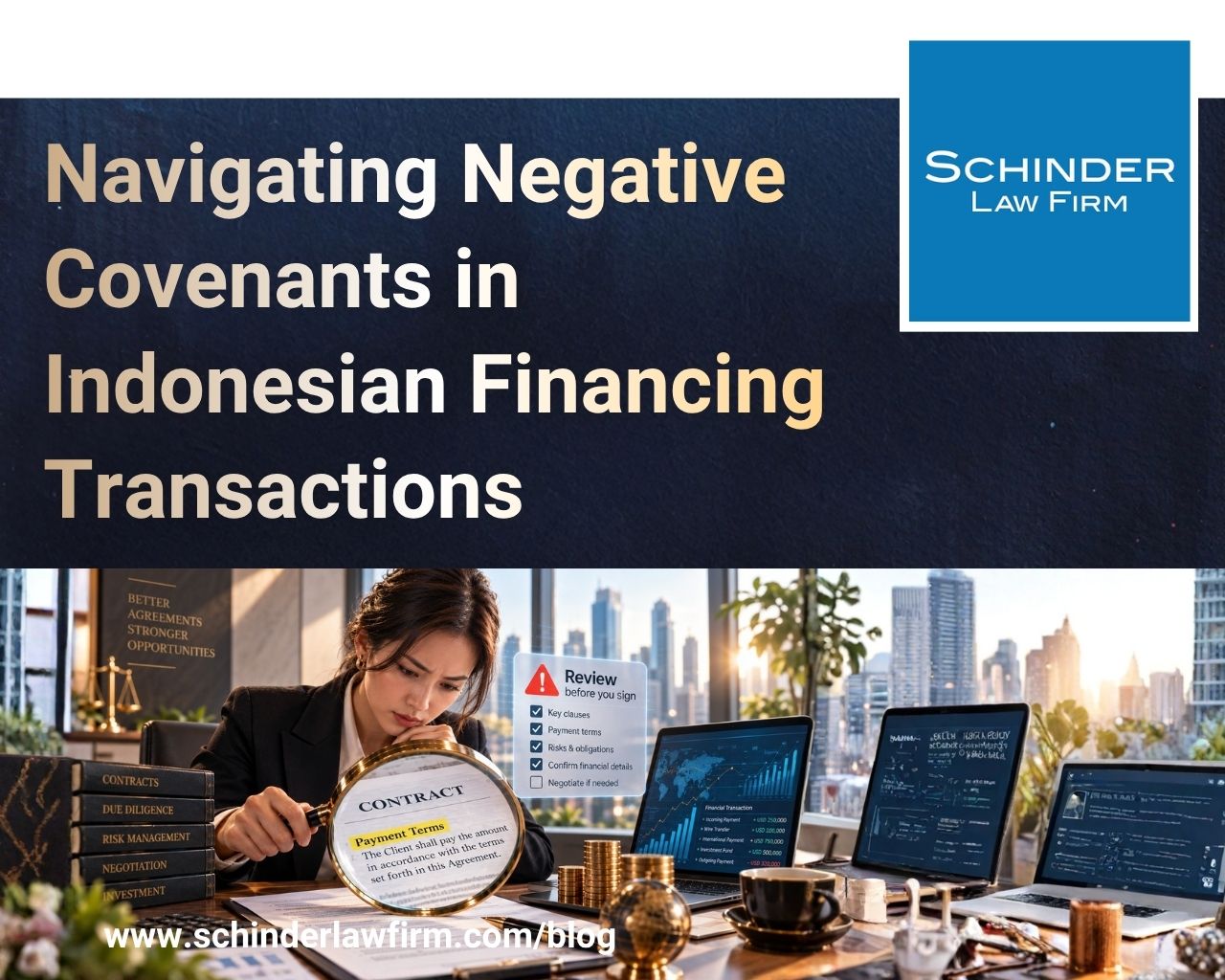
Navigating Negative Covenants in Indonesian Financing Transactions
When negotiating a loan agreement in Indonesia, borrowers often focus primarily on the interest rate and repayment schedule, while treating the remaining provisions as standard contractual boilerplate. However, one of the most important sections of any financing document is the negative covenant clause...

New Foreign Investment Rules in Bali 2026: What Foreign Investors Need to Know About PMA, Zoning and Business Licensing
Bali has long been one of Indonesia’s most attractive destinations for foreign investors. The growth of tourism, hospitality, wellness, real estate, and various service sectors has made Bali one of the most sought-after investment destinations. However, entering 2026, the regulatory landscape is changing. The Government is increasingly strengthening its supervision of Foreign Investment (Penanaman Modal Asing or “PMA”) activities in Bali...

Share Buybacks under Indonesian Company Law: Key Legal Limitations and Considerations
In corporate practice, it is not uncommon for shareholders to decide to relinquish their ownership in a company, whether for business reasons, ownership restructuring, investment realignment, or differences of opinion among shareholders. In such circumstances, one of the options often considered is for the company itself to repurchase the shares held by the exiting shareholder, a mechanism commonly referred to as a share buyback....
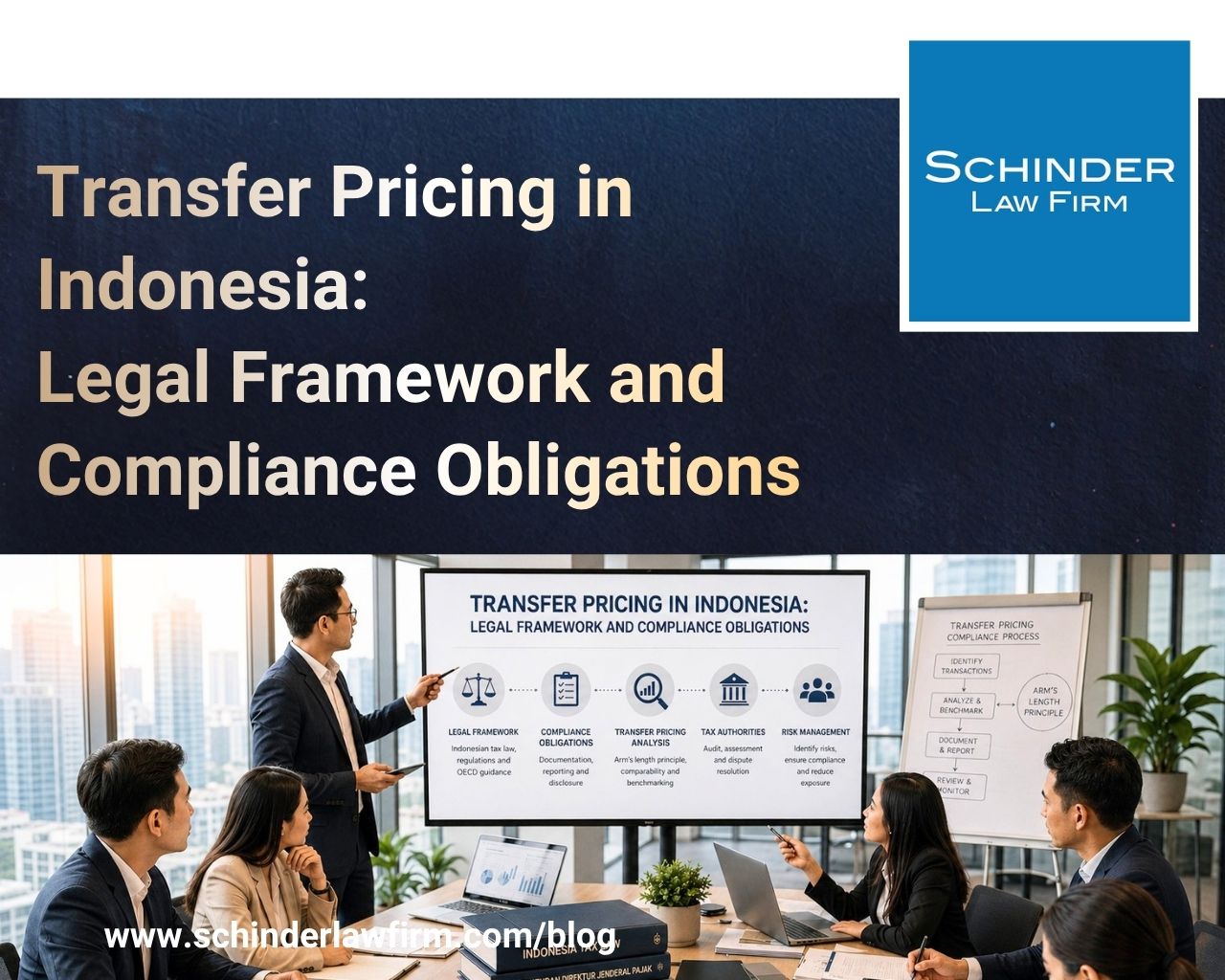
Transfer Pricing in Indonesia: Legal Framework and Compliance Obligations
Transfer pricing is commonly associated with taxation. However, from a legal perspective, it is equally a matter of regulatory compliance, corporate governance, and risk management. As business groups increasingly operate across multiple jurisdictions, transactions between affiliated entities have become an ordinary part of commercial operations. These transactions may involve the sale of goods, management services, licensing arrangements, royalty payments, financing transactions, and transfers of intellectual property...
A New Era of Data Protection in Indonesia: Understanding Government Regulation No. 33 of 2026
After nearly four years since the enactment of Law No. 27 of 2022 on Personal Data Protection ("PDP Law"), the Indonesian Government has finally issued Government Regulation No. 33 of 2026 concerning the Implementing Regulation of the PDP Law ("GR 33/2026"). This long-awaited regulation provides greater clarity on various technical aspects that were not comprehensively addressed under the PDP Law, including personal data processing, legal bases for processing, data subject rights, cross-border data transfers, regulatory oversight, and administrative sanctions...

New Non-Halal Labeling Rules in Indonesia: What Businesses Need to Prepare Before 2027
Indonesia's halal regulatory framework continues to develop, and businesses operating in the consumer goods sector need to pay attention not only to halal certification requirements but also to the growing obligation to clearly communicate the halal status of their products. As part of the Government's effort to strengthen consumer protection and transparency, businesses distributing products that are not halal-certified or contain non-halal elements will be required to comply with specific non-halal labelling requirements...
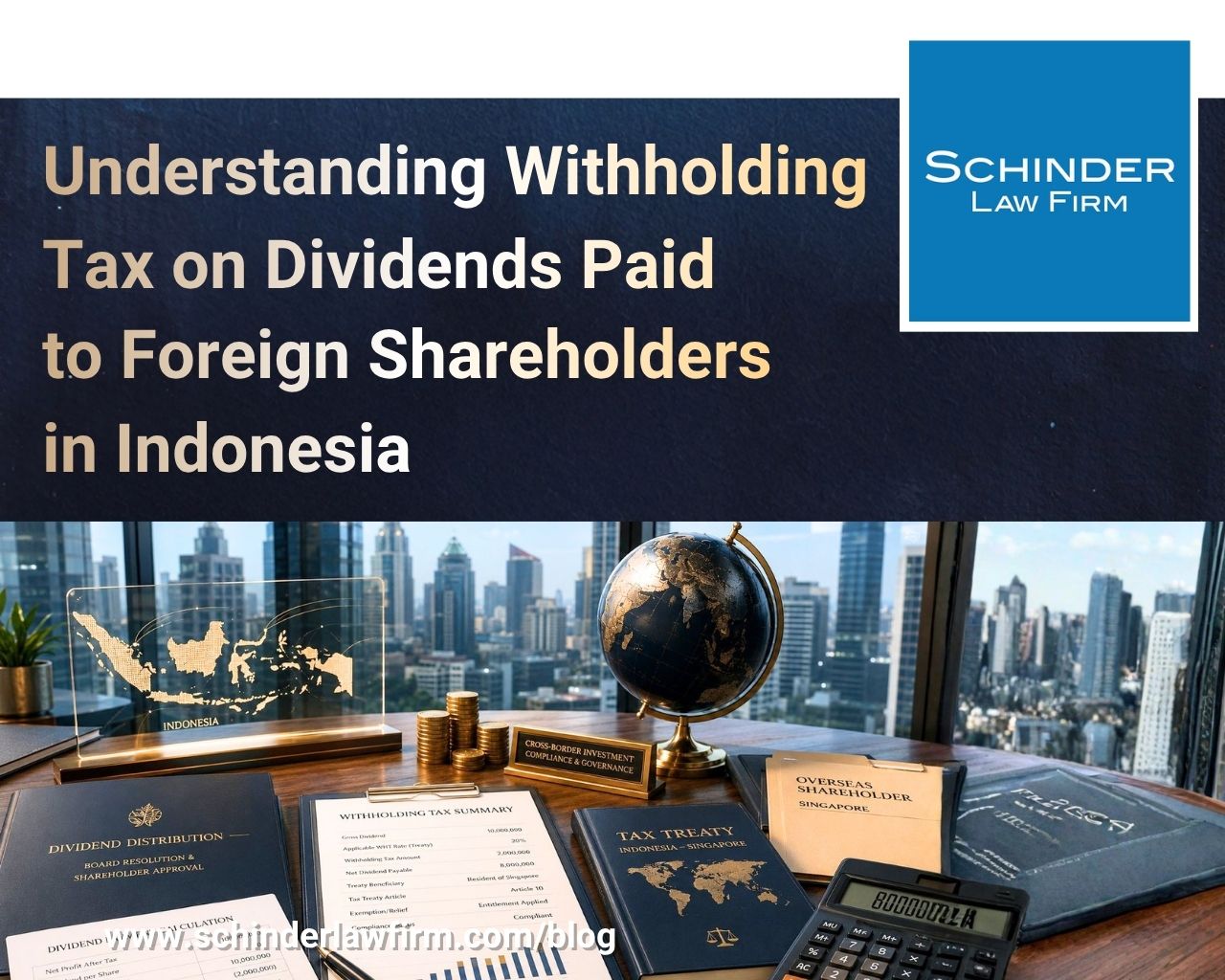
Understanding Withholding Tax on Dividends Paid to Foreign Shareholders in Indonesia
For foreign investors looking to establish or expand their business presence in Indonesia, understanding the tax implications of profit repatriation is an important part of investment planning. While Indonesia offers significant opportunities across various sectors, investors must also consider how returns from their investments will be distributed and what tax obligations may arise. One of the key considerations is the withholding tax on dividends paid to foreign shareholders...

Investing Through Indonesia's Special Economic Zones (KEK): Understanding the KEK Facility Track for Businesses and Investors
When businesses consider expanding into Indonesia, discussions often focus on market size, workforce availability, and investment opportunities. However, one of the most significant advantages available to investors is frequently overlooked: the range of fiscal and non-fiscal incentives available through Indonesia's Special Economic Zones (Kawasan Ekonomi Khusus / KEK)...
Indonesia's Digital Economy is Growing Fast: What Businesses Need to Know About Data Processing, Hosting, and Digital Infrastructure
Over the last decade, Indonesia has emerged as one of the most dynamic digital markets in Asia. From online shopping and digital payments to cloud computing and artificial intelligence (AI), technology has become deeply embedded in the way businesses operate and consumers interact. As digital transformation accelerates across industries, one sector has quietly become the backbone of this growth: data processing, hosting, and related digital infrastructure services...

Priority Access to Mining Business Permit Areas (WIUP): Religious Organizations and Cooperatives Enter Indonesia's Mineral and Coal Mining Sector
Indonesia's mining sector is undergoing a significant transformation. Traditionally, access to Mineral and Coal Mining Business Permit Areas (Wilayah Izin Usaha Pertambangan / WIUP) was primarily available to state-owned enterprises, regional government-owned enterprises, and private business entities through competitive licensing mechanisms...

Franchising in Indonesia: Building a Strong Business Expansion Strategy with the Right Legal Foundation
For many entrepreneurs, franchising represents one of the fastest and most effective ways to expand a successful business. Instead of opening and operating every new location independently, a business owner can leverage the resources and local market knowledge of franchisees while maintaining control over the brand, business system, and customer experience...
Supply Chain Compliace in Indonesia: Why Businesses Can No Longer Ignore Legal Risks
When people hear the term “supply chain,” they often think about logistics, transportation, inventory, and delivery schedules. However, in today's business environment, supply chain management is no longer just an operational matter...